




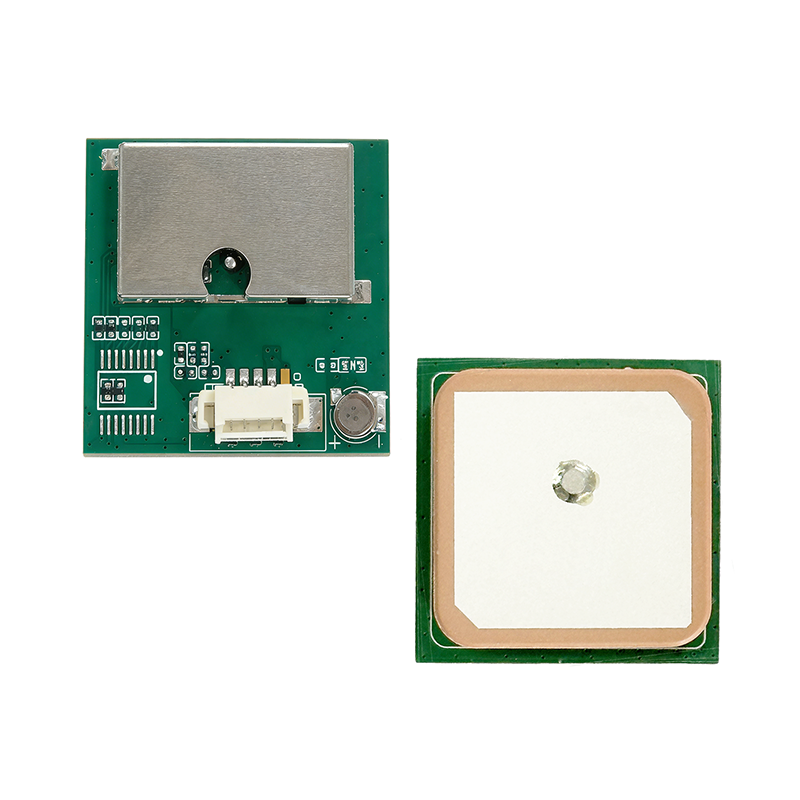

WKG0254T06Y01 is a high-performance, low-power multi-GNSS navigation and positioning module. It is based on the AT6850 SoC, an 8th-generation low-power chipset from Zhongke Micro. The chip integrates an RF front-end, digital baseband, multi-constellation signal processing engine, and power management unit, providing high integration and simplified external circuitry.
WKG0254T06Y01 is a high-performance, low-power multi-GNSS navigation and positioning module. It is based on the AT6850 SoC, an 8th-generation low-power chipset from Zhongke Micro. The chip integrates an RF front-end, digital baseband, multi-constellation signal processing engine, and power management unit, providing high integration and simplified external circuitry.
WKG0254T06Y01 supports GNSS signal reception in the L1 frequency band, including BDS (BeiDou Navigation Satellite System), GPS, GLONASS, and Galileo. It supports both single-constellation and multi-constellation positioning. The module also supports BeiDou-2 and BeiDou-3, enabling standalone BeiDou positioning and timing.
With high sensitivity, low power consumption, and compact design, the module is suitable for applications such as vehicle positioning and navigation, power system timing, 4G/5G communication timing, and IoT positioning devices.
l Supports single- and multi-constellation positioning (BDS / GPS / GLONASS / Galileo)
l Supports A-GNSS
l Cold start sensitivity: -148 dBm
l Hot start sensitivity: -156 dBm
l Reacquisition sensitivity: -160 dBm
l Tracking sensitivity: -162 dBm
l Position accuracy: 1.5m (CEP50)
l TTFF: ≤23s
l Low power consumption (~30mA @5V)
l Integrated LNA
l Built-in 25x25x4mm ceramic antenna(customization size available)
l Fast hot start (<1s) with onboard capacitor
l Standard NMEA-0183 output
l Vehicle navigation and tracking
l Power timing / 4G/5G synchronization
l IoT positioning devices
l UAV (drones)
l Portable device
Supports A-GNSS, providing assistance data such as ephemeris, approximate position, and time.
This significantly reduces Time-To-First-Fix (TTFF), even in weak signal environments.
The module outputs data via UART interface using NMEA-0183 protocol.
Company Address
Floor 11, Block A, Building 9, Baoneng Science and Technology Park, Qingxiang Road, Longhua District, Shenzhen
Tel: +86 755-8329018
Business Hours
Monday–Friday
9:00 AM–6:00 PM (GMT+8)



+8613247518427



0755-8329018

13602688458


